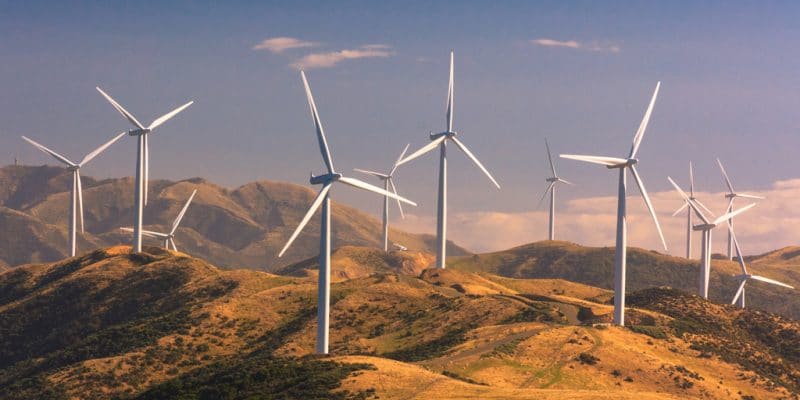
Wind Turbines, ie RES, wind power plants have recently made a power plant in Turkey are as intense. Almost every part of Turkey to the wind power plants are established. This energy system has come to meet almost 20% of the country's energy needs.
Altay Security is the only authorized and professional organization in the security of these power plants. How many security personnel should be in the field, how many guard points should be, how many security watches should be kept at the points, where and when the patrol should be in every hour, what should the vehicle preference be, we have the answer to all of them, sign a security contract with us and entrust the field to us. We are giving best security services in Turkey and all middleeast
Wind Power Security Company in Turkey Wind Power Security in Turkey – Protecting Renewable Energy InvestmentsTurkey has rapidly positioned itself as one of the most dynamic renewable energy markets in its region. With strong government support, increasing private investment, and expanding grid infrastructure, wind power projects continue to grow across the country. As this growth accelerates, wind power security in Turkey has become a strategic priority for investors, operators, and energy stakeholders who must protect high-value infrastructure spread across wide and often remote territories.
Wind farms represent long-term capital investments that require uninterrupted operation. Even minor security incidents can lead to significant financial losses, operational delays, and reputational damage. For this reason, modern energy operators no longer treat security as a secondary function. Instead, they view it as an integrated part of risk management and operational continuity planning.
Across Turkey, renewable energy companies are increasingly seeking advanced protection models that combine professional manpower, intelligent monitoring systems, and energy-independent surveillance technologies. This integrated approach ensures that wind energy assets remain protected under a wide range of environmental and operational conditions.
The Evolving Security Landscape of Wind Energy ProjectsThe rapid expansion of wind farms has transformed the security requirements of the energy sector. Unlike conventional industrial facilities, wind energy sites are typically distributed across very large geographical areas. Turbines may be located on hills, rural plains, coastal ridges, or isolated plateaus where natural surveillance is minimal and response times can be longer.
This dispersed structure creates a different security profile compared to compact facilities. Instead of protecting a single perimeter, operators must maintain visibility and control across multiple critical points, including turbine bases, substations, access roads, cable routes, and maintenance zones.
As wind investments expand throughout Turkey, operators are recognizing that traditional guarding models alone cannot provide sufficient coverage. Modern wind power security in Turkey now depends on layered protection strategies that extend beyond physical presence and incorporate smart, scalable technologies.
Operational Challenges in Wind Farm ProtectionWind energy environments present several practical challenges that directly influence security planning. Sites are often located far from urban centers, which can limit rapid intervention if incidents occur. Terrain conditions may include uneven ground, wide open fields, or elevated ridges, all of which require careful patrol planning and surveillance positioning.
In addition, many wind farms operate with lean staffing models. While this improves operational efficiency, it also means fewer on-site personnel are available to observe and report unusual activity. As a result, security systems must compensate by providing continuous automated visibility.
Another important consideration is infrastructure value density. Critical components such as copper cabling, transformers, and control systems can attract targeted theft or tampering attempts if not properly monitored. Preventive security design therefore plays a crucial role in maintaining uninterrupted energy production.
Professional Security Personnel as the First LayerDespite rapid technological advancement, trained on-site personnel remain a cornerstone of wind farm protection. Professional security officers provide controlled access management, visible deterrence, and immediate human response capability when required.
However, effective deployment in wind energy environments requires specialized planning. Security teams must be comfortable operating in large outdoor areas, capable of conducting structured patrols, and trained to recognize early indicators of suspicious activity. Discipline, situational awareness, and strong reporting procedures are particularly important in remote energy projects.
When properly integrated into a broader security framework, professional personnel significantly strengthen overall site control. Their role becomes even more effective when supported by intelligent monitoring technologies that extend their field visibility.
Solar-Powered Surveillance Systems – A Game ChangerOne of the most important innovations in wind power security in Turkey is the increasing adoption of solar-powered surveillance solutions. Because many wind farms are located in areas where extending electrical infrastructure is costly or impractical, energy-independent monitoring has become a highly valuable capability.
Solar camera systems allow operators to establish reliable visual coverage without relying on the grid. This flexibility enables rapid deployment at turbine clusters, perimeter zones, temporary work areas, and expansion phases of wind projects.
The advantages are significant. Installation can be completed much faster compared to traditional wired systems, trenching costs are reduced, and monitoring continuity is maintained even in fully off-grid environments. For large wind farms that continue to expand over time, solar surveillance provides the scalability that modern operators require.
In Turkey’s diverse geography — from coastal wind corridors to inland plateaus — energy-independent monitoring has proven particularly effective. It allows security coverage to grow in parallel with energy infrastructure, ensuring that protection keeps pace with investment. Intelligent Video Analytics and Proactive DetectionAnother major shift in wind power security in Turkey is the transition from passive monitoring to intelligent detection. Modern surveillance platforms are increasingly equipped with advanced video analytics that can interpret activity in real time.
Instead of relying solely on human observation, these systems help identify unusual movement patterns, unauthorized presence, or unexpected activity near critical infrastructure. This proactive approach significantly reduces response time and helps security teams focus their attention where it matters most.
For large wind farms, intelligent analytics also help minimize false alarms that traditionally burden monitoring centers. By filtering routine environmental movement from genuine security events, operators achieve both higher efficiency and improved situational awareness.
Centralized Remote Monitoring CapabilitiesAs renewable portfolios grow, many operators in Turkey are moving toward centralized monitoring models. Through secure communication networks, multiple wind farm locations can be supervised from a single control center.
This approach provides several operational advantages. Continuous visibility is maintained across geographically dispersed assets, incident escalation becomes faster, and coordination between field teams improves significantly. Centralized oversight also supports standardized reporting and performance tracking across the entire energy portfolio.
For investors managing multiple wind projects across Turkey, remote monitoring has become an essential component of modern security architecture.
Mobile Patrol Integration for Wide-Area CoverageBecause wind farms extend over large territories, mobile patrol units remain an important complementary layer of protection. Dynamic patrol coverage provides both visible deterrence and flexible response capability.
When patrol teams are integrated with real-time surveillance data, their effectiveness increases substantially. Security managers can direct patrol routes based on live site conditions, ensuring that attention is focused on priority zones. Modern patrol management tools, including GPS tracking and digital reporting, further enhance operational transparency.
This combined model — fixed surveillance plus mobile response — is widely considered best practice for large wind energy installations in Turkey. Engineering Security for Harsh Field ConditionsWind farm environments can be demanding for electronic equipment. Strong winds, temperature fluctuations, dust exposure, and seasonal weather changes all place stress on surveillance hardware. For this reason, durability and proper system engineering are critical factors in long-term performance.
High-quality equipment selection, correct positioning, and professional installation directly influence monitoring reliability. Energy operators increasingly prefer security solutions that are specifically designed for outdoor industrial environments rather than adapted from standard commercial systems.
Nationwide Security Coverage for Wind Energy ProjectsWind energy investments are expanding across many different regions of Turkey, each with its own geographic and operational characteristics. For this reason, security providers must be capable of delivering flexible and scalable solutions that can be deployed nationwide.
A comprehensive wind power security strategy should be adaptable to coastal wind corridors, inland energy zones, mountainous terrain, and rural installations. Consistent service quality across all regions is essential for investors managing multiple sites.
Organizations that can combine local operational capability with centralized technological oversight are best positioned to support Turkey’s growing renewable energy infrastructure.
The Future of Wind Power Security in TurkeyLooking ahead, the role of intelligent and energy-independent security solutions will continue to expand. As wind projects become larger and more technologically sophisticated, protection strategies will evolve in parallel.
Key trends shaping the future include deeper integration between physical security and AI-driven monitoring, wider adoption of solar surveillance units, increased reliance on centralized control models, and stronger emphasis on predictive risk management.
Energy companies that invest early in advanced wind power security in Turkey will gain a significant operational advantage. By reducing risk exposure, improving response capability, and maintaining continuous visibility, they can protect both their infrastructure and long-term investment performance.
ConclusionThe rapid growth of renewable energy has made wind power security in Turkey a mission-critical priority for modern energy operators. Wide site layouts, remote locations, and high-value infrastructure require more than traditional guarding approaches.
An effective protection strategy must combine trained security personnel, solar-powered surveillance systems, intelligent analytics, mobile patrol capability, and centralized monitoring. Together, these elements create a resilient and scalable security framework capable of supporting Turkey’s expanding wind energy sector.
As the country continues its transition toward sustainable power generation, advanced security solutions will play an increasingly important role in safeguarding wind energy investments and ensuring uninterrupted production for years to come.